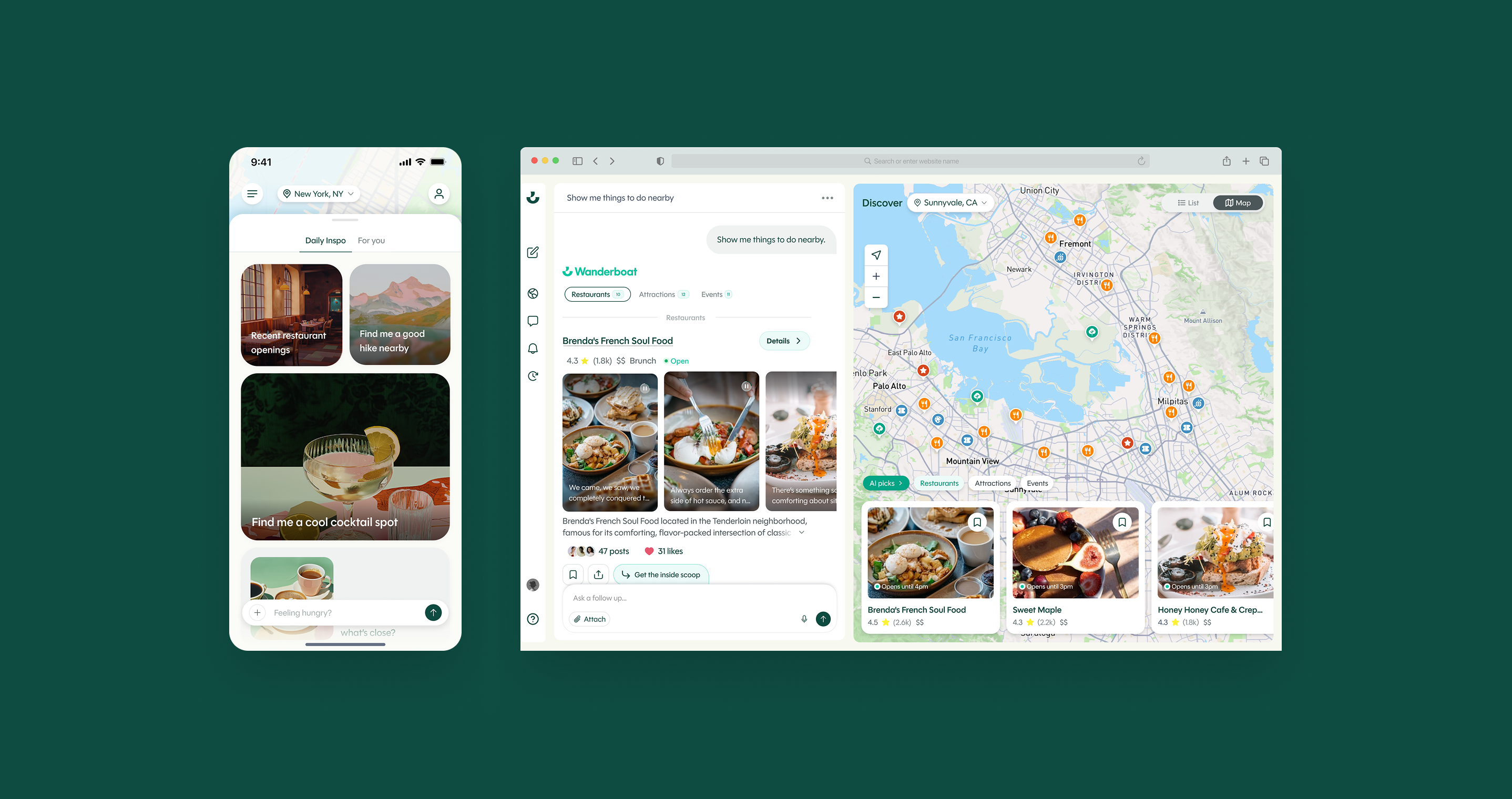
AI-powered local discovery tool

An AI-native discovery platform that guides users from intent to action by combining personalized recommendations, map context, and user-generated content.
AI-Driven Discovery
Interactive Map
Community (UGC)
My Role:
Product Designer
Status:
Launched on web and iOS
Timeline:
March  - August 2025
Team:
1 Product designer, 2 Visual designers, 1 Product manager, 2 AI Engineers, 5 Developers
Deliverables:
  • Revamped 80% of web and iOS interfaces, enhancing usability and consistency for 2M+ users.
  • Built a design system from scratch and established design guidelines to scale design quality.
  • Conducted user research to guide decisions.

Impact

22%
in project-led user growth
27%
in user engagement with AI interactions and feature exploration.
15%
in average time spent on key pages

Overview

About:
Wanderboat is an AI-powered local discovery platform that transforms how people find places to eat, explore, and stay. Unlike traditional search or generic AI summaries, it blends chat-based feeds with an immersive map, surfacing curated dining, events, attractions, hotels, and experiences — all grounded in real photos and videos from real people.

Problem

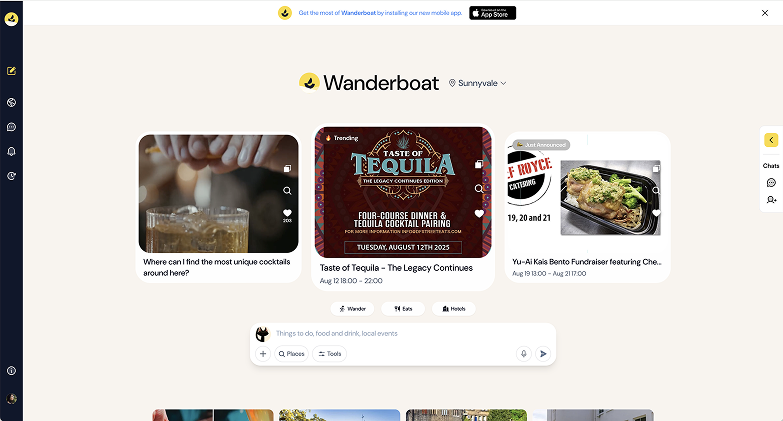
AI’s role was unclear on the homepage
The homepage mixed prompts, recommendations, and auto-scrolling content in one feed, making it unclear what the AI was meant to help users do or where to begin.
Text-heavy AI responses reduced engagement
Chat responses were long and text-heavy, causing users to read them like answers rather than explore options. Users wanted clearer rationale and visual proof.
Discovery, chat, and maps felt disconnected
Discovery, chat, and maps worked as separate surfaces, making it hard for users to compare options or make quick decisions.

Why it mattered to fix

Discovery is Wanderboat's core value proposition. If users can't understand what the AI can do for them — or find the interface confusing — the product loses its primary differentiator.
Old Design

How AI Works Here

Wanderboat’s AI analyzes millions of social posts and videos in real time, using a POI engine, Thinking Agent, and Vision Understanding to deliver personalized, trustworthy local recommendations.

User Research

Based on responses from 300 users, three clear themes emerged that shaped every design decision that followed.

AI's purpose was invisible until it failed

"I didn't know what to do when I opened the app — there were too many things happening at once."
Users landed on the homepage with no clear entry point. The mix of prompts, cards, and auto-scrolling content created visual noise rather than guiding intent. Users didn't know whether to type, tap, or scroll or many did nothing.

Recommendations felt informational, not actionable

"The AI just gave me a list. I wanted to see it, understand why, and then go."
Long text responses caused users to read rather than explore. Without visual context, photos, map proximity, real reviews — recommendations felt abstract. Users wanted confidence to act, not just information to process.

Switching between discovery and map broke momentum

"I found a place I liked but then had to figure out where it was separately. It should just show me."
Discovery, chat, and the map operated as disconnected surfaces. Users comparing options had to mentally stitch together information across views — a friction that caused drop-off at the moment of highest intent.

Design Goals

01: Clarify product value through a more guided, intent-driven experience
Help users quickly understand what Wanderboat can do for them by designing clearer onboarding, contextual prompts, and guided AI interactions that highlight the product’s unique value among other AI tools.
02: Increase engagement through more interactive and rewarding exploration
Enhance the chat and discovery flows to encourage deeper interaction. Introduce more intuitive navigation, richer content formats, and proactive AI suggestions that keep users engaged longer and motivate them to explore.
03: Establish a scalable, cross-platform design system
Create a unified design system that ensures consistent UI components, interaction patterns, and visual language across web and mobile. This foundation supports long-term scalability and supports future surfaces like events, hotels, social content, and trip planning.

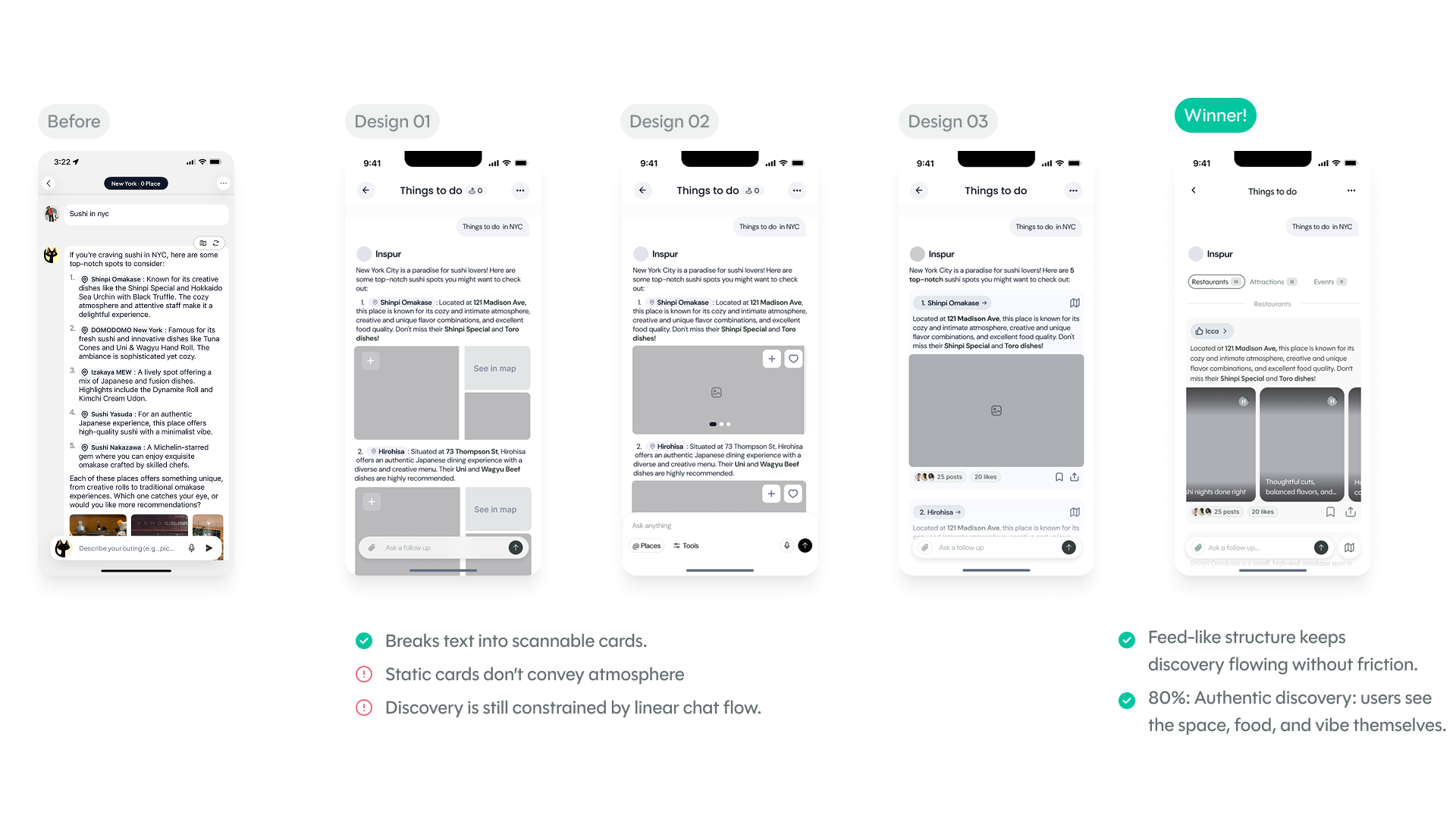
Selected drafts

I worked with engineers to validate feasibility and backend data support, and with AI experts to refine chat interactions, ensuring designs were both user-friendly and technically achievable.
Ideas to action

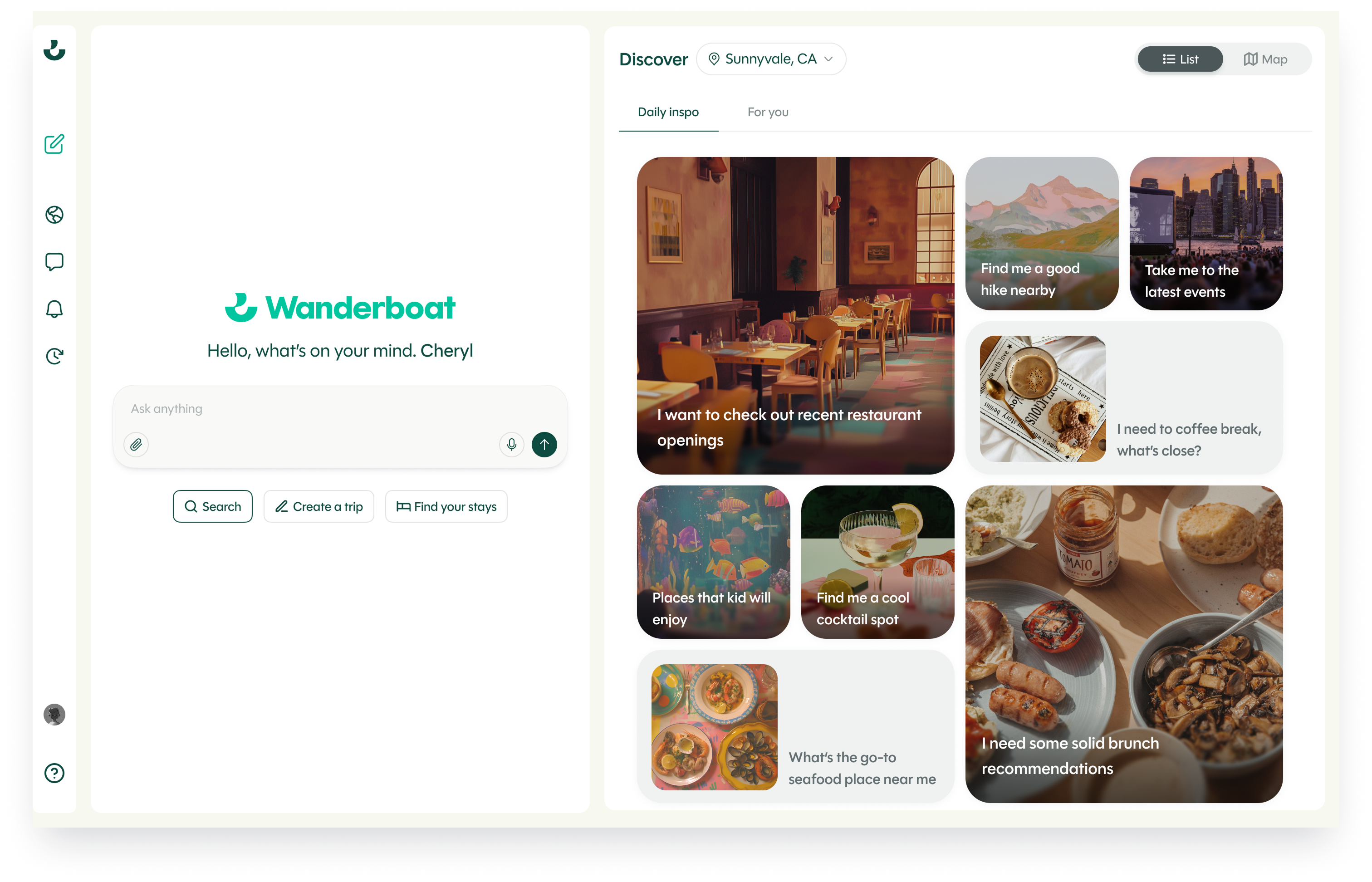
Design goal 01 · Clarify product value

More Guided, Intent-Driven Experience

The homepage was redesigned with contextual prompts, visual hierarchy, and personalised suggestions to guide users toward exploration.

Solves: AI's role was unclear — users didn't know where to start.
Design goal 02 ·  Increase engagement

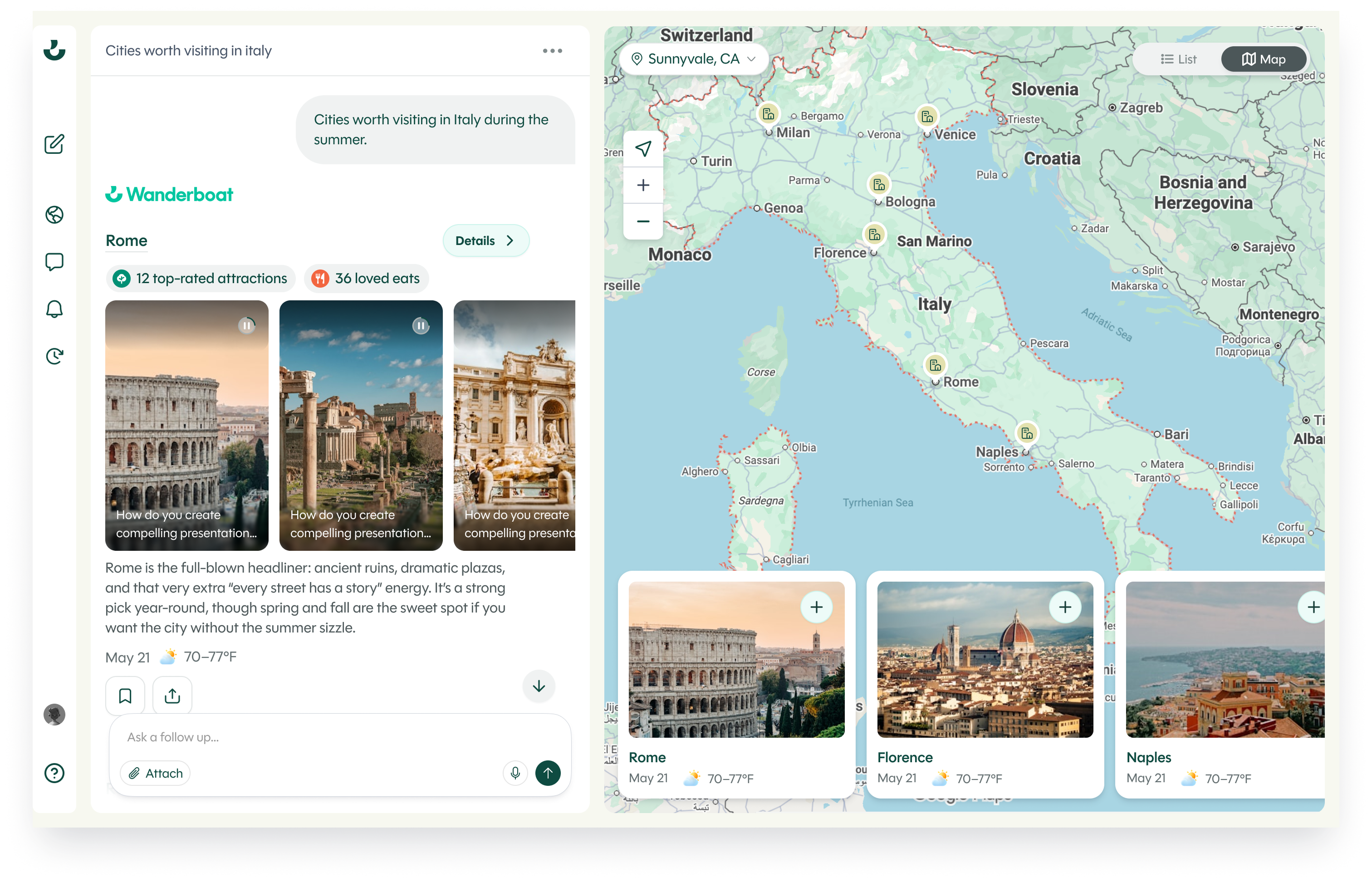
Build trust through context-rich results

Replaced long text summaries with short scannable cards, and brought the map and user content into one surface.

Solves: text-heavy responses reduced engagement — users read instead of explored
Design goal 02 ·  Increase engagement

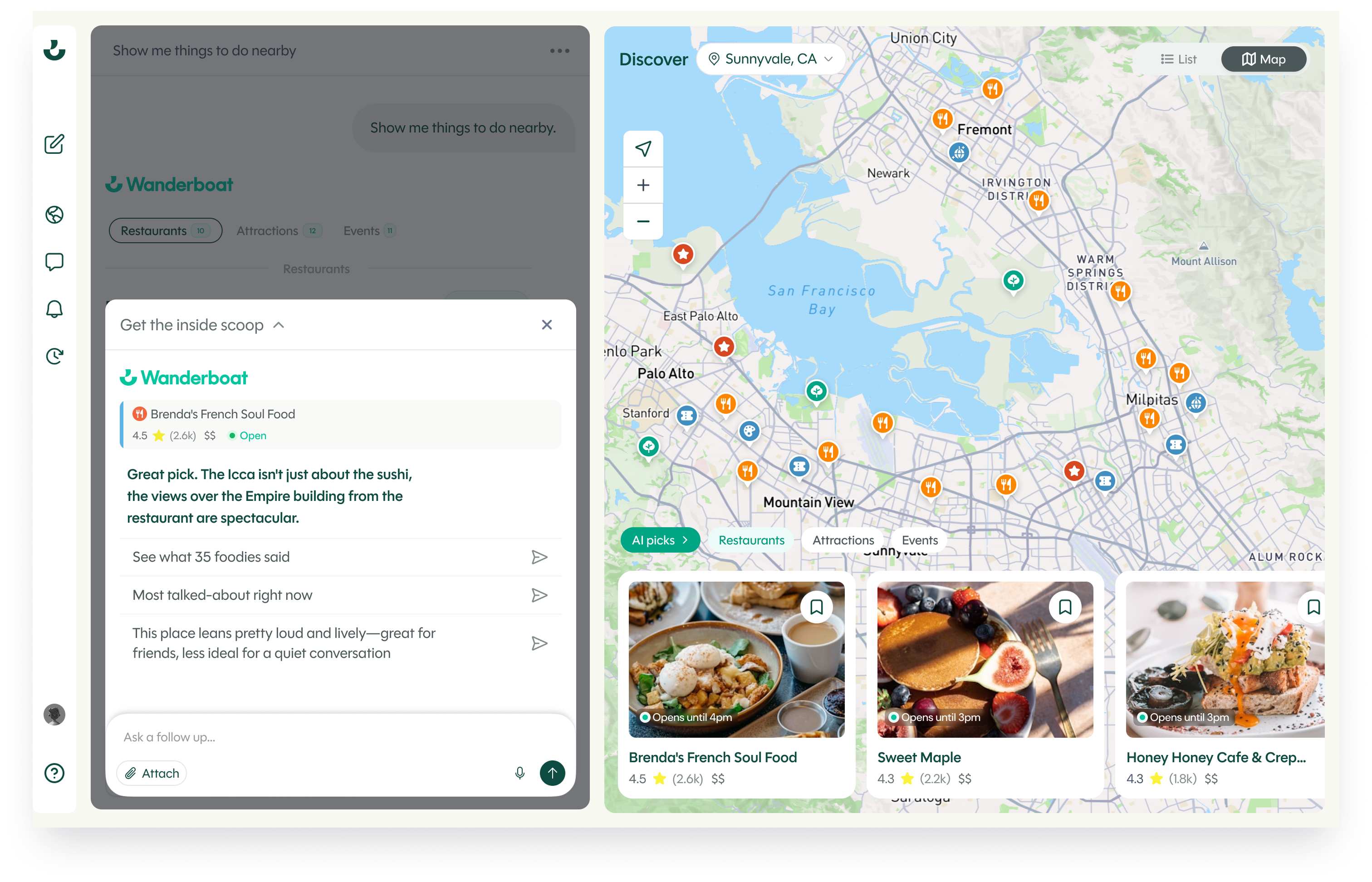
Deep Dive — ask questions without breaking flow

Deep Dive opens a focused AI conversation scoped to a single recommendation. Same visual context, no
scroll loss, no thread pollution. AI engagement depth where users already are.

Solves: even with richer results, users still had lightweight follow-up questions about specific places — "Is it good for a date?", "How loud is it on weekends?" — but asking in the main chat meant losing scroll context and getting a generic response disconnected from the card they were looking at.
Design goal 03 ·  Establish a scalable design system

Built a cross-platform design system from zero

Designed and documented a unified component library such as buttons, color tokens, toasts and alerts — spanning web and iOS.

Solves: inconsistent UI across web and iOS slowed the team down and made the product feel unpolished


AI Discovery for the Car Screen